Banners
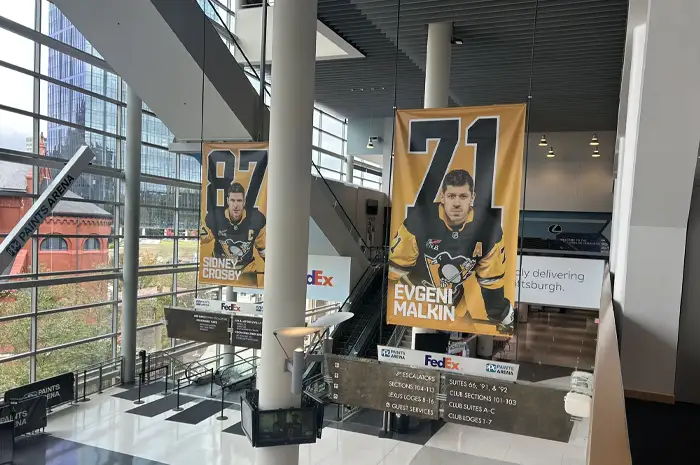
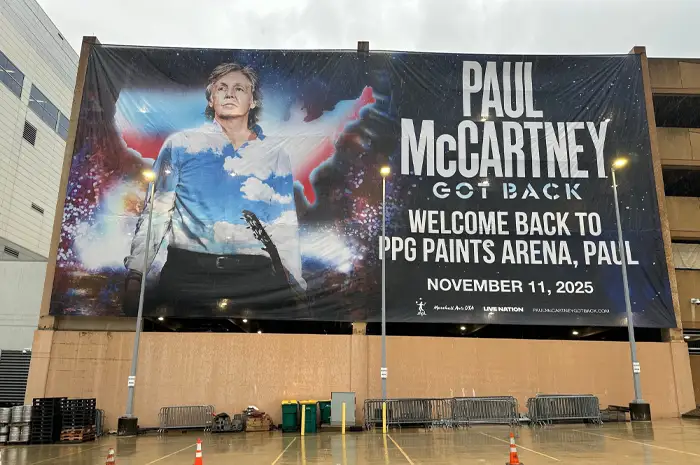
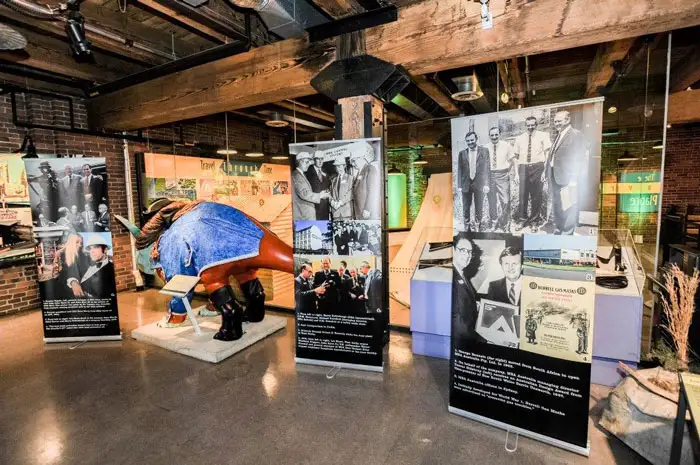
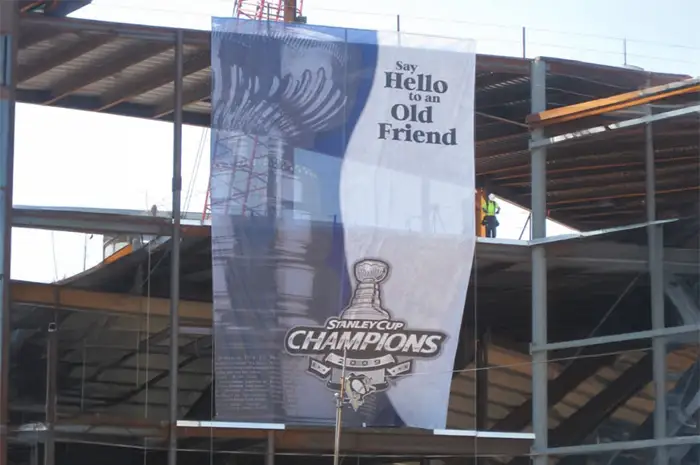

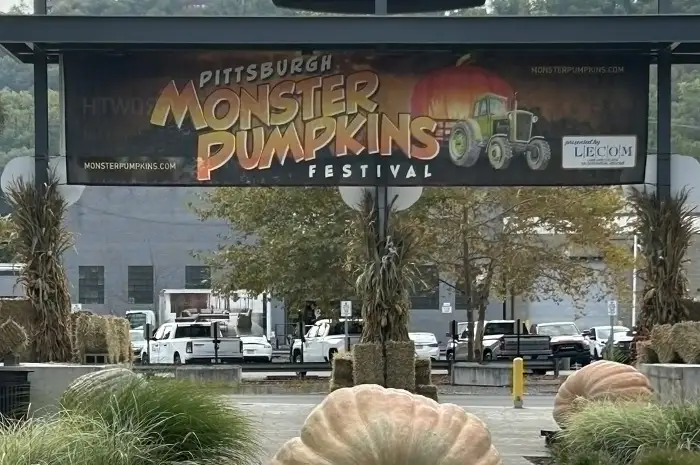
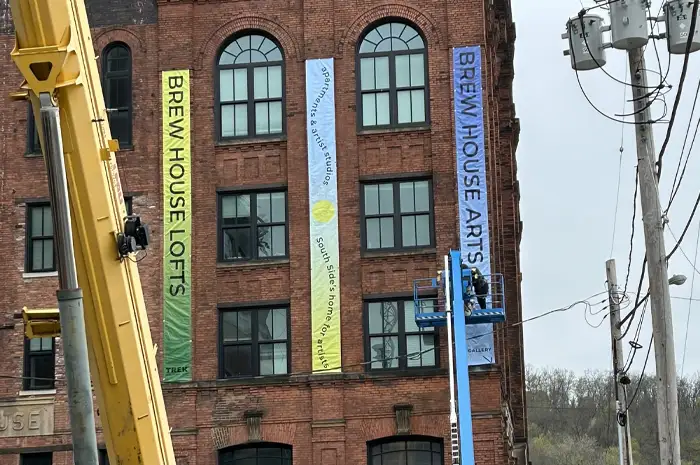
Printed banners are an economical way of displaying your message. They are versatile and affordable and can be made in any size. Banners can be used both indoors and outdoors and can be printed single sided or double sided. A wide variety of finishing options can be customized for your specific situation. Mesh banners can be used to decrease the wind load on large prints. Banners are custom made to the size that fits your needs.
Summary of Banner Material Types
1.) Vinyl (PVC) Banner
The most widely used banner material; durable and weather-resistant.
Typical Weight: 13 oz, 15 oz, or 18 oz.
Best For: Outdoor advertising, long-term use, event signage.
Pros: Strong, waterproof, good print quality, affordable.
Cons: Not eco-friendly; can crease if folded.
2.) Mesh Banner
Vinyl material with tiny holes that allow wind to pass through.
Best For: Outdoor installations in windy locations—fences, scaffolding, large building wraps.
Pros: Wind-resistant, lightweight, reduces strain on grommets.
Cons: Slightly lower print resolution due to perforation.
3.) Fabric Banner (Polyester / Dye-Sublimated Fabric)
Soft, wrinkle-resistant fabric printed with dye-sublimation for vibrant color.
Best For: Indoor events, trade shows, retail, stage backdrops.
Pros: High-end look, vibrant colors, washable, easy to transport.
Cons: Less durable outdoors; may fade with prolonged sunlight.
4.) Canvas Banner
Heavy cotton or poly-cotton material with a textured, artistic finish.
Best For: Indoor décor, gallery displays, upscale retail signage.
Pros: Premium appearance, high-quality print detail.
Cons: Not suited for harsh outdoor conditions; generally more expensive.
5.) Polypropylene (PP) Banner
A smooth, tear-resistant plastic film often used for indoor posters and short-term signs.
Best For: Indoor point-of-sale signs, lightweight hanging banners.
Pros: Eco-friendlier than PVC, good print quality, smooth finish.
Cons: Limited outdoor durability.
6.) Backlit Film (Translucent Material)
A translucent polyester film designed for illuminated displays.
Best For: Lightboxes, menu boards, illuminated outdoor displays.
Pros: Bright, vibrant colors when backlit; waterproof.
Cons: Must be used with a light source; more expensive than paper or vinyl.
7.) Blockout Banner Material
Opaque vinyl with a “blackout” core preventing light from passing through.
Best For: Double-sided banners, street pole banners, hanging displays.
Pros: No show-through; strong and durable.
Cons: Heavier and costlier than standard vinyl.
8.) Eco-Friendly (PVC-Free) Banner Materials
Sustainable alternatives such as polyester, PP, or biodegradable films.
Best For: Brands emphasizing sustainability, indoor/outdoor green signage.
Pros: Reduced environmental impact; good printability.
Cons: May be less durable than vinyl depending on the material.